


NCAR Talk 001: Reflections on Thailand Biennale Chiang Rai 2023 with Kido Ryusuke and Shimabuku Michihiro
Introduction
The NCAR Talk series is an initiative designed to bring the Center’s activities closer to the public and to provide a deeper understanding of our work by engaging in in-depth conversations with guest speakers in a small, informal, and welcoming setting.
For NCAR Talk 001, we welcomed as guests the artists Kido Ryusuke and Shimabuku Michihiro, who participated in the Thailand Biennale Chiang Rai 2023, an exhibition selected as a precursor project under NCAR’s “Artists Support Program.”
With curator Iida Shihoko serving as moderator, the speakers shared their experiences at the biennale and discussed the kinds of support needed for artists to pursue international careers.
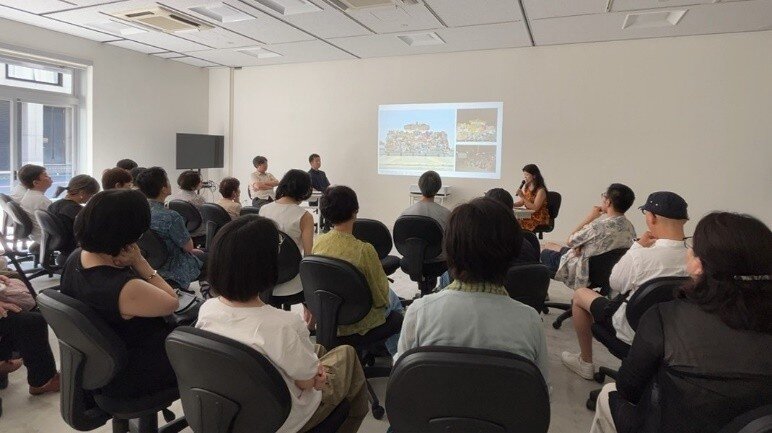
NCAR TALK001 held at Tokyo University of the Arts, Ueno
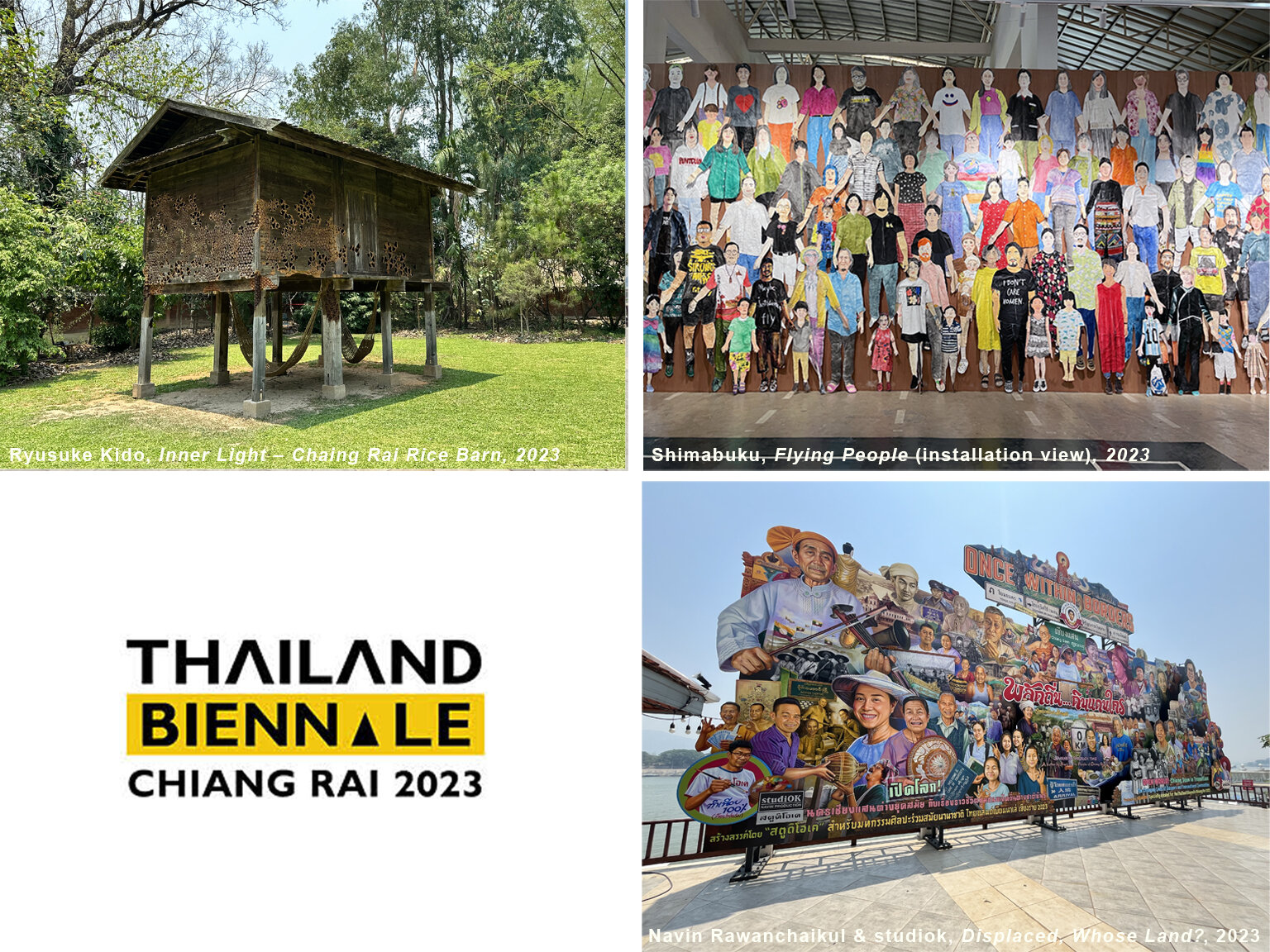
About the Thailand Biennale
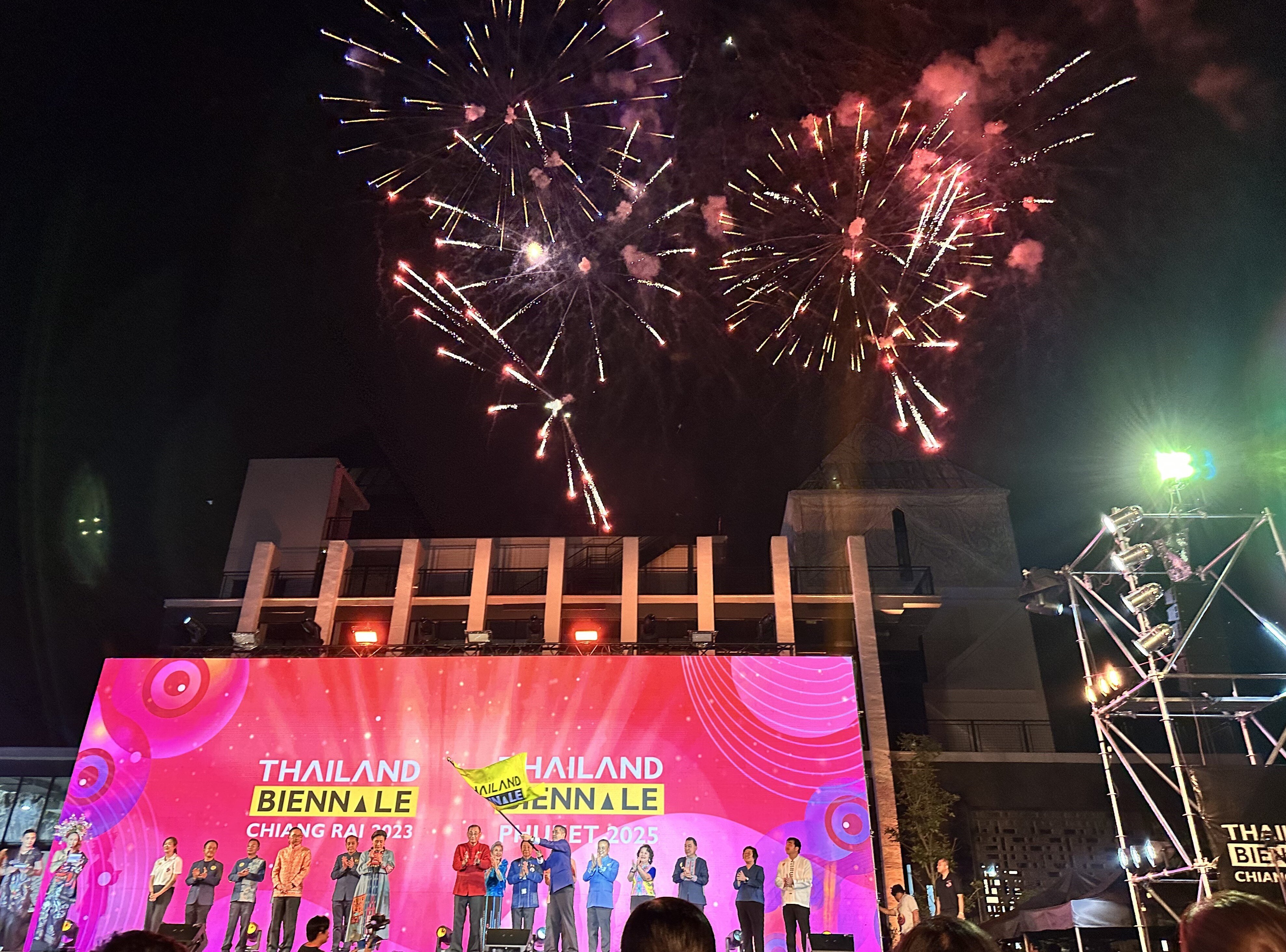
Launched in 2018, the Thailand Biennale was held for the third time in this edition. Each iteration takes place in a different location within Thailand and also serves as a platform for regional revitalization through contemporary art.
In 2023, the biennale was held across two cities in northern Thailand, Chiang Rai and Chiang Saen. Works by 60 artists and artist groups from 21 countries were presented at 18 venues. In addition, numerous collaborative projects and pavilion exhibitions organized independently by public and private institutions took place.
Under the theme “The Open World,” the biennale explored the rich traditions and natural environment of northern Thailand from the thirteenth century to the present, as well as the geopolitics of the Mekong River basin, economic development, the diverse regional communities formed by many ethnic groups, and changing perspectives on gender, religion, and belief. Through these themes, the biennale sought to share issues common to the contemporary world with artists from Thailand and abroad, while opening itself to the local community.
The exhibition was organized by a team that included directors and curators with deep ties to Chiang Rai. In her report, Iida introduced an overview of the biennale and presented scenes from the exhibitions at each venue.
Ida’s report on the Thailand Biennale can also be found from the article below.
Report by Ryusuke Kido
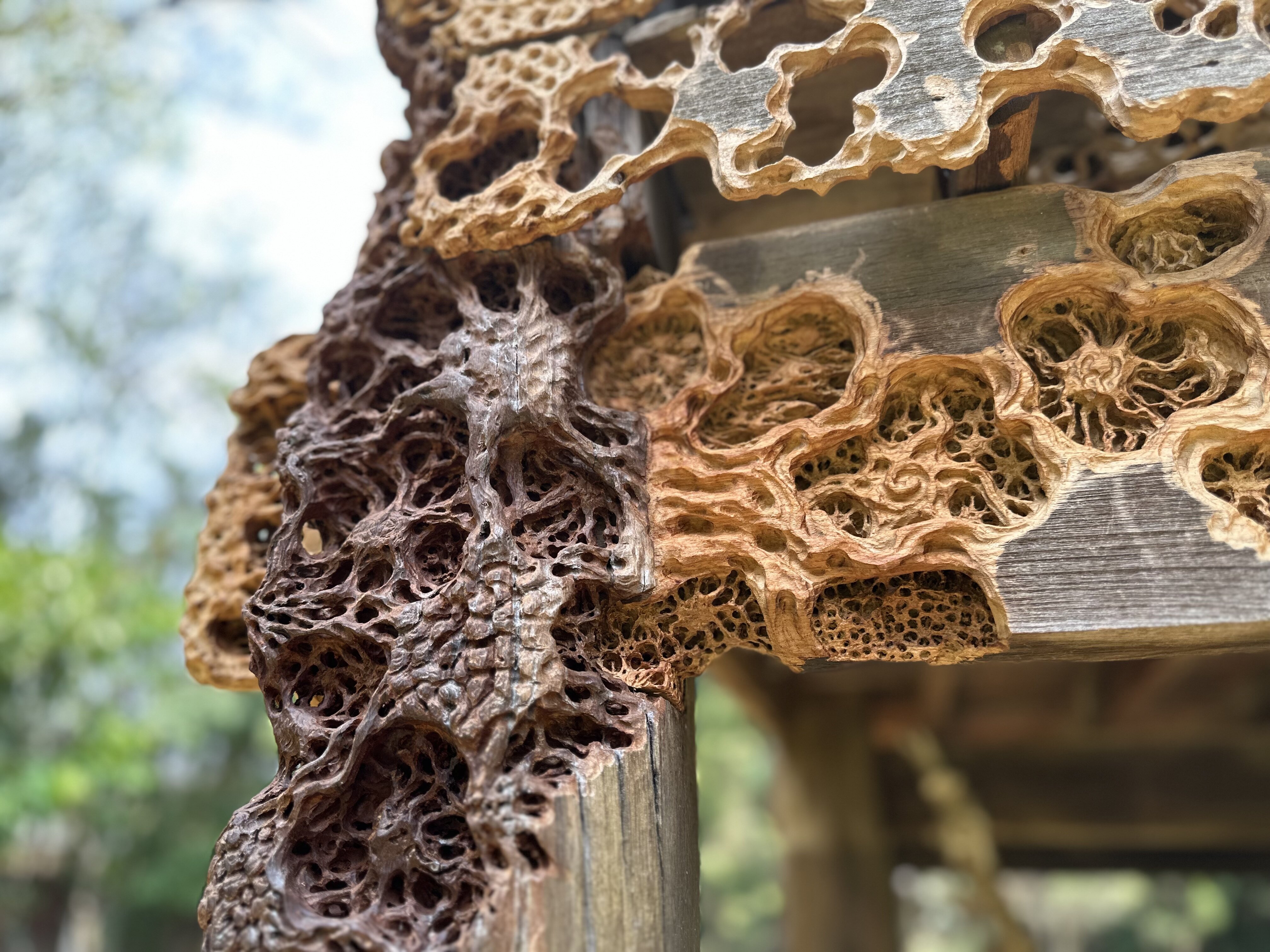
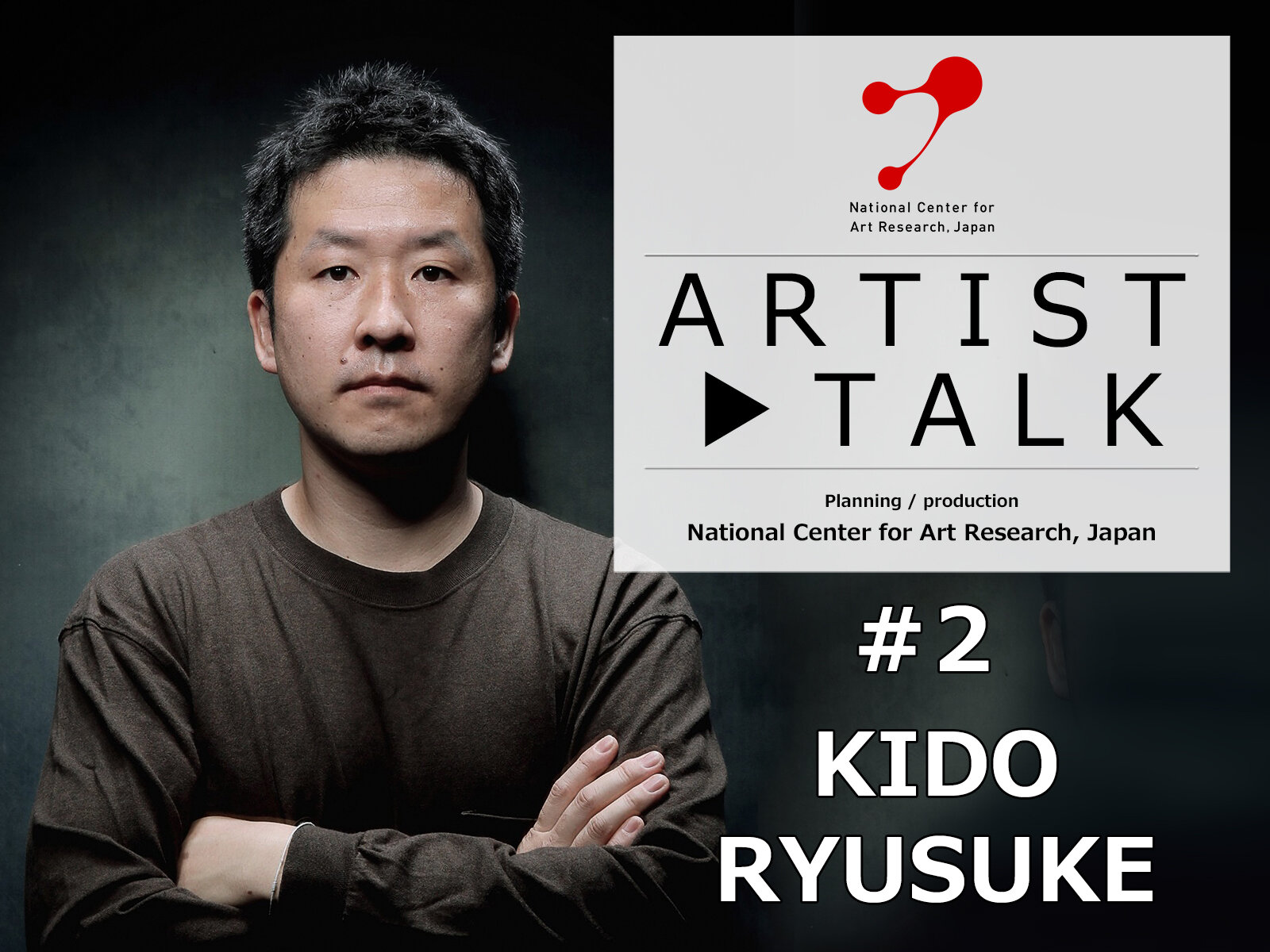
Kido spoke about the local conditions he observed and his collaboration with local wood craftsmen during his approximately two-month residency and production period, the longest stay among the invited international artists.
A sculptor, Kido exhibited a sculptural work made from a traditional wooden rice granary that had been used in rural Thailand, installing it in a national park in Chiang Rai. After relocating the elevated granary structure to the park, he visited the site every day to continue his work.
Rice granaries, which store rice—an essential staple in Asian societies—are themselves disappearing as social conditions change. Kido regarded these granaries as symbols reflecting shifts in Thai agriculture as well as Thailand’s land system and social structures. Through his work, he sought to examine the complexity of Thai society from multiple perspectives and to create opportunities for dialogue and relationship building.
The work was inspired by small but persistent feelings of unease that the artist experienced during his visits to Thailand, such as the labor conditions and agricultural systems that support inexpensive services and delicious meals, and the social circumstances surrounding local craftsmen.
-
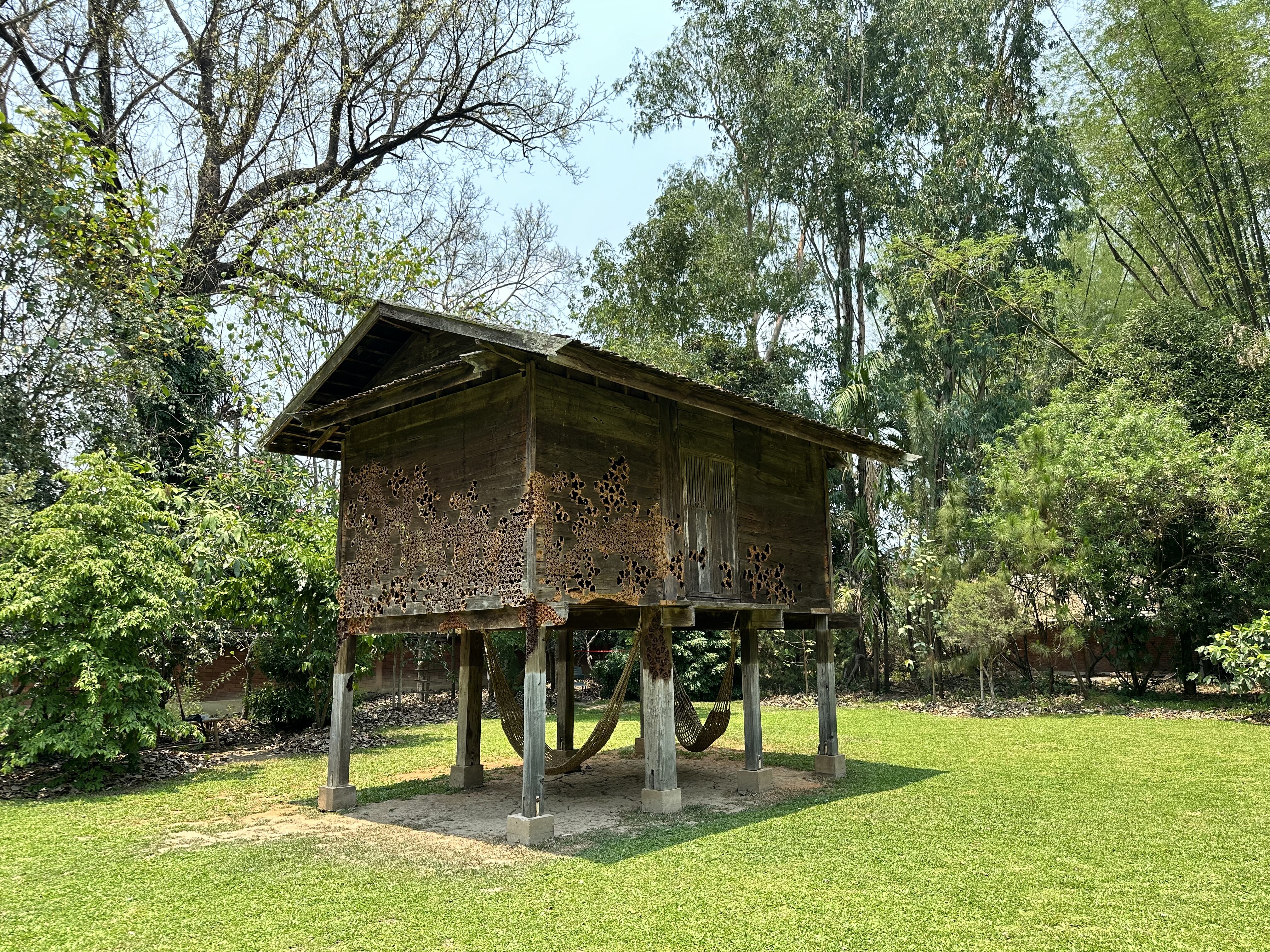 Ryusuke Kido, Inner Light ー Changing Rai Rice Barn, 2023
 -
Related
Articles
Report by Shimabuku Michihiro
Responding to Kido’s presentation, Shimabuku began by speaking about how there are aspects of art that can only be understood by seeing the work on site. He explained that certain qualities can only be conveyed by experiencing the environment and atmosphere in which a work is created—feeling the temperature, the wind, and hearing the insects—things that photographs alone cannot communicate.
Shimabuku described his own practice as “creating the air.” By sensing how the atmosphere changes simply by shifting the placement of a work, he explained that he creates his works as if composing “poems in space.”
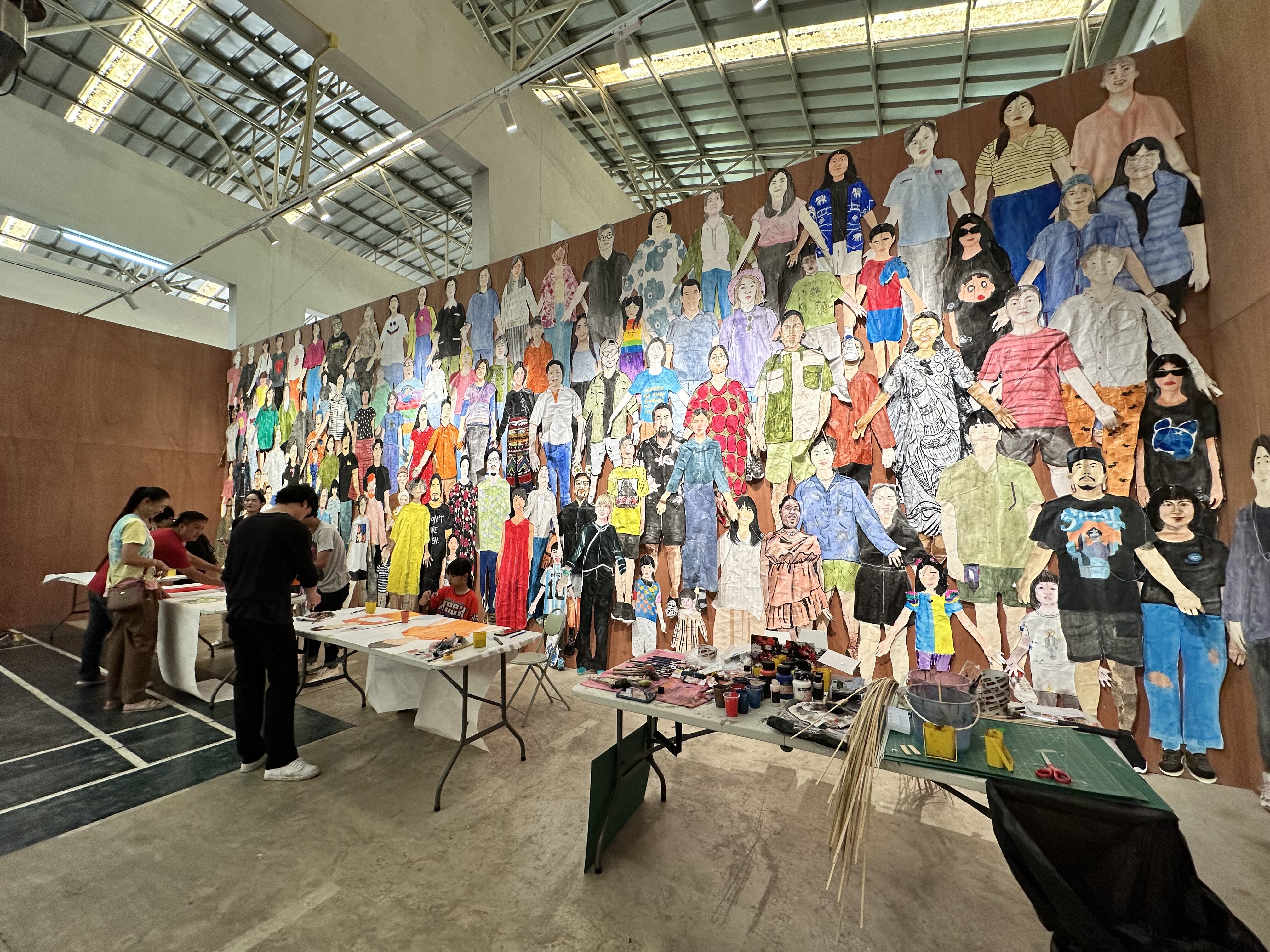
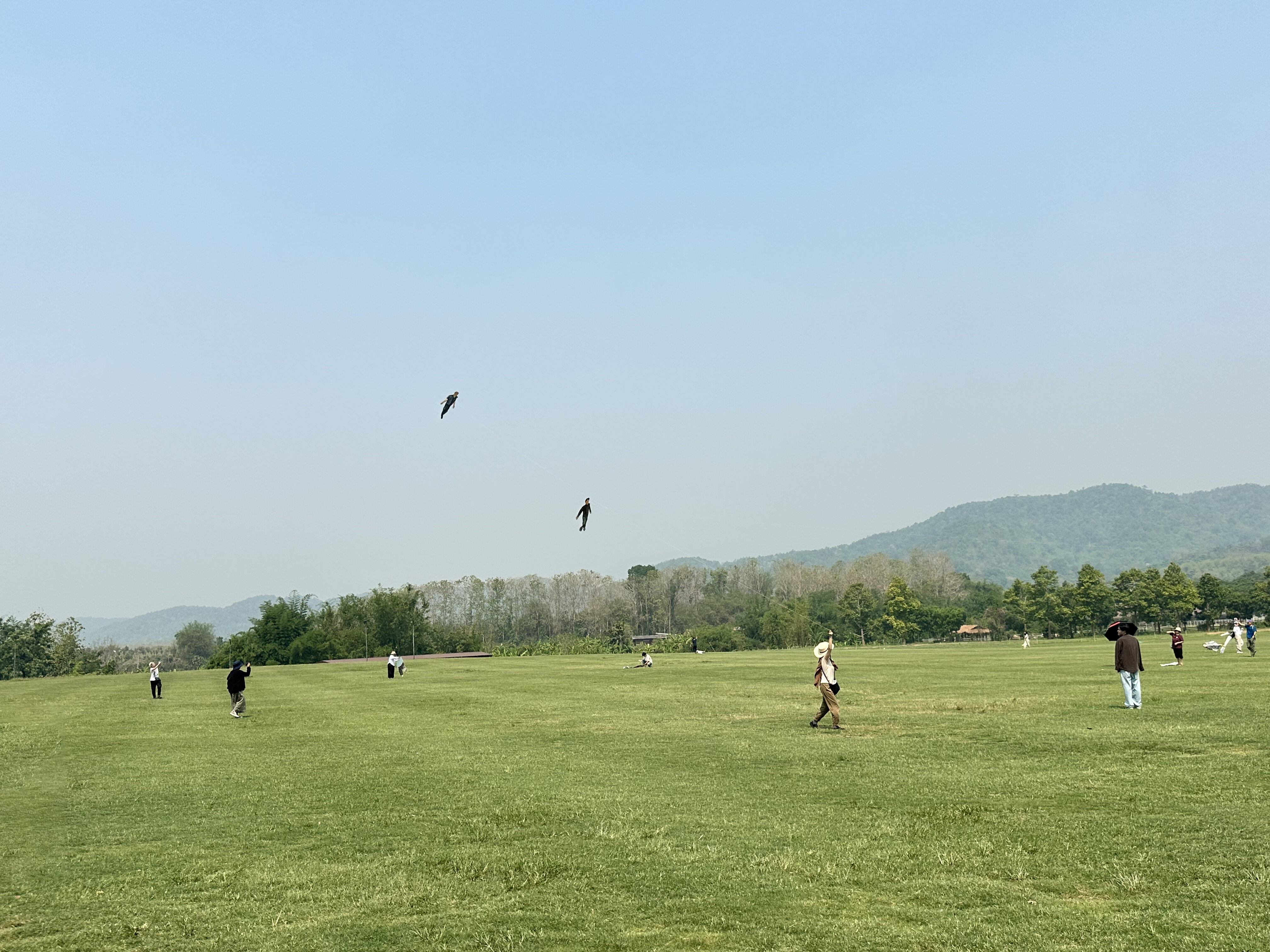
One of the directors of the biennale, Rirkrit Tiravanija, has worked with Shimabuku in the past and shares what he described as “a relationship like family.” The presentation of Flying People was at the request of the biennale organizers. The work involves making kites in the shape of human figures and flying them in the sky. Watching a kite shaped like oneself flying overhead, he said, creates a strange sensation, as if experiencing an out-of-body state.
Workshops were held during the opening and closing periods of the exhibition, and by December approximately 120 kites had been produced. After being flown, the completed kites were displayed across the walls of the venue.
-
 Michihiro Shimabuku, Flying People, 2023 (installation view)
 -
Discussion
In the discussion following the presentations, participants shared a range of perspectives on NCAR’s program, for which the organizers of international exhibitions submit applications. Comments included, “It is helpful that artists do not need to struggle to secure funding themselves,” and “It is better when support goes directly to artists, because the supporters become visible.”
Others noted that in Europe and the United States, nationality rarely influences decisions about eligibility for support and emphasized the importance of setting broad and flexible criteria and actively promoting supported projects. There were also comments highlighting the importance of the Center independently identifying necessary forms of support and the outcomes that such support should achieve.
Participants also discussed the significance of exchanges among artists and with curators at international exhibitions where artists from many regions gather. As a distinctive feature of the Thailand Biennale, they noted the wide range of public programs held throughout the exhibition period, as well as the enthusiastic involvement of volunteers who proudly explained the artworks to visitors, creating a welcoming and collaborative atmosphere across the entire region.
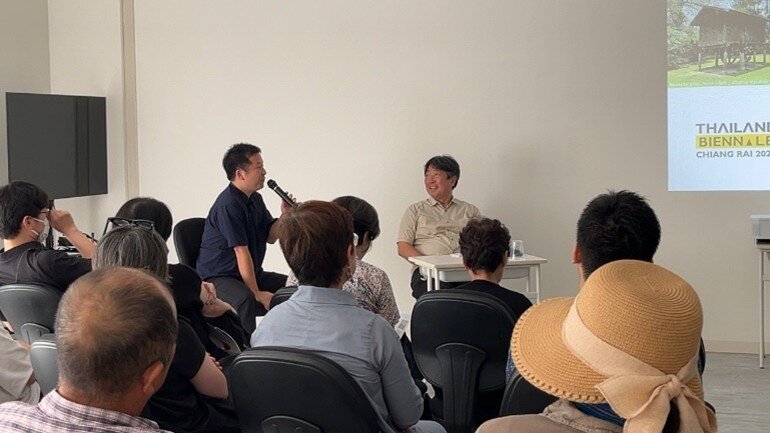
From left: Ryusuke Kido and Michihiro Shimabuku
Through the “Artist Support Program,” NCAR has supported 13 international exhibitions involving 46 artists to date (As of August 2024).
For more information about the “I Artist Support Program,” please click here.
