



NCAR Talk 002: The Art Scene in Australia Today: Focusing on the Collection of the Art Gallery of New South Wales (AGNSW)
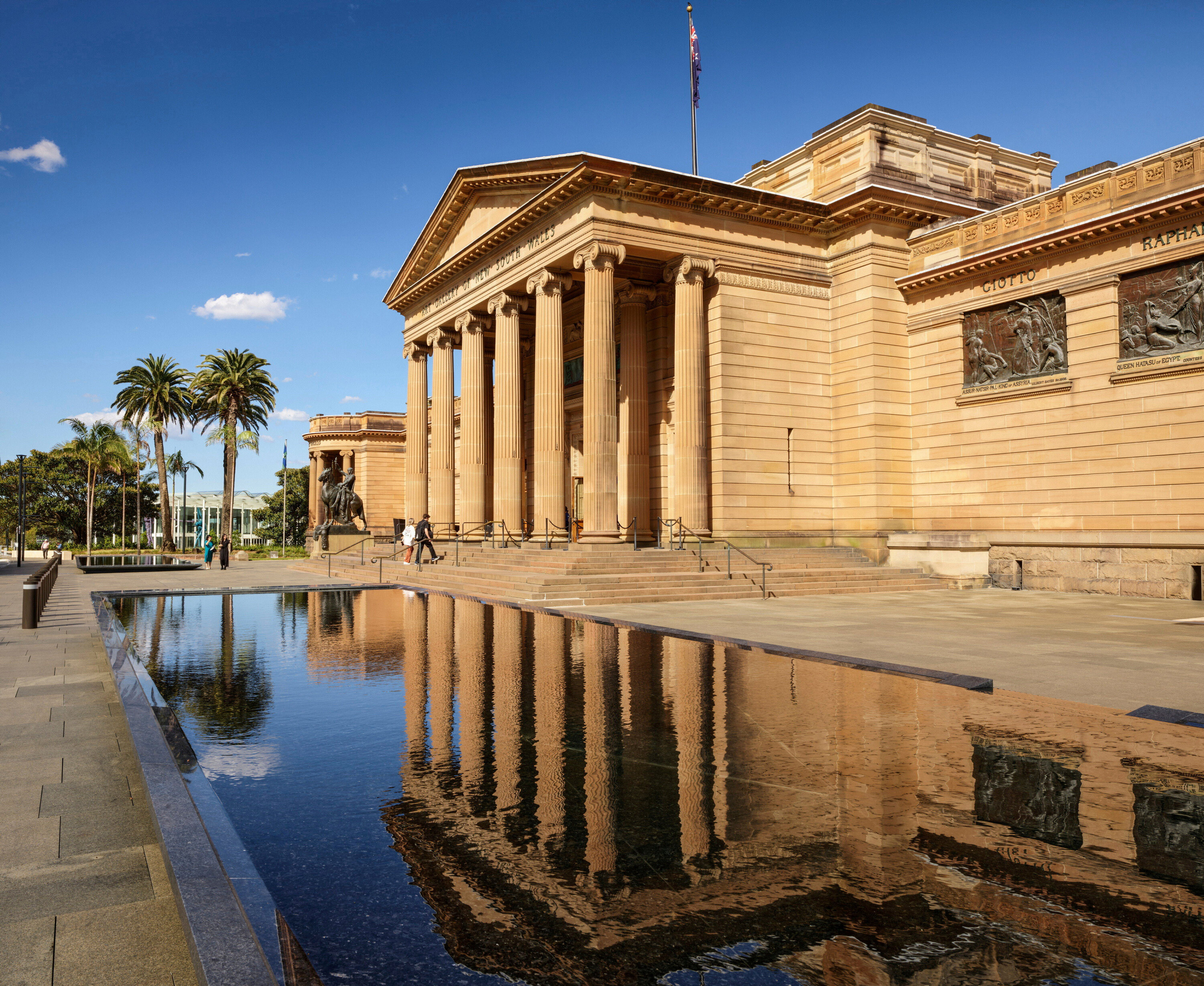
Exterior view of Art Gallery of New South Wales, Naala Nura building, photo ©Jenni Carter
Introduction
For NCAR Talk 002, we welcomed Nicholas Chambers, Senior Curator at the Art Gallery of New South Wales (AGNSW) in Sydney, Australia.
Established in 1871, AGNSW has a quasi-encyclopedic collection with curators focusing on indigenous and non-indigenous Australian art, as well as art from around the world. In 2021, the museum expanded with the construction of a new building designed by Japanese architectural firm SANAA. In the wake of the extension, the museum’s collection displays were also renovated. By reorganizing the collection gallery without designating particular places, styles, or periods, AGNSW has animated moments of reciprocity and exchange between different cultural and historical contexts. Reflecting on the museum’s history, Mr. Chambers shared insights through three case studies, illustrating how AGNSW has acquired and integrated diverse collections of historical and contemporary art.
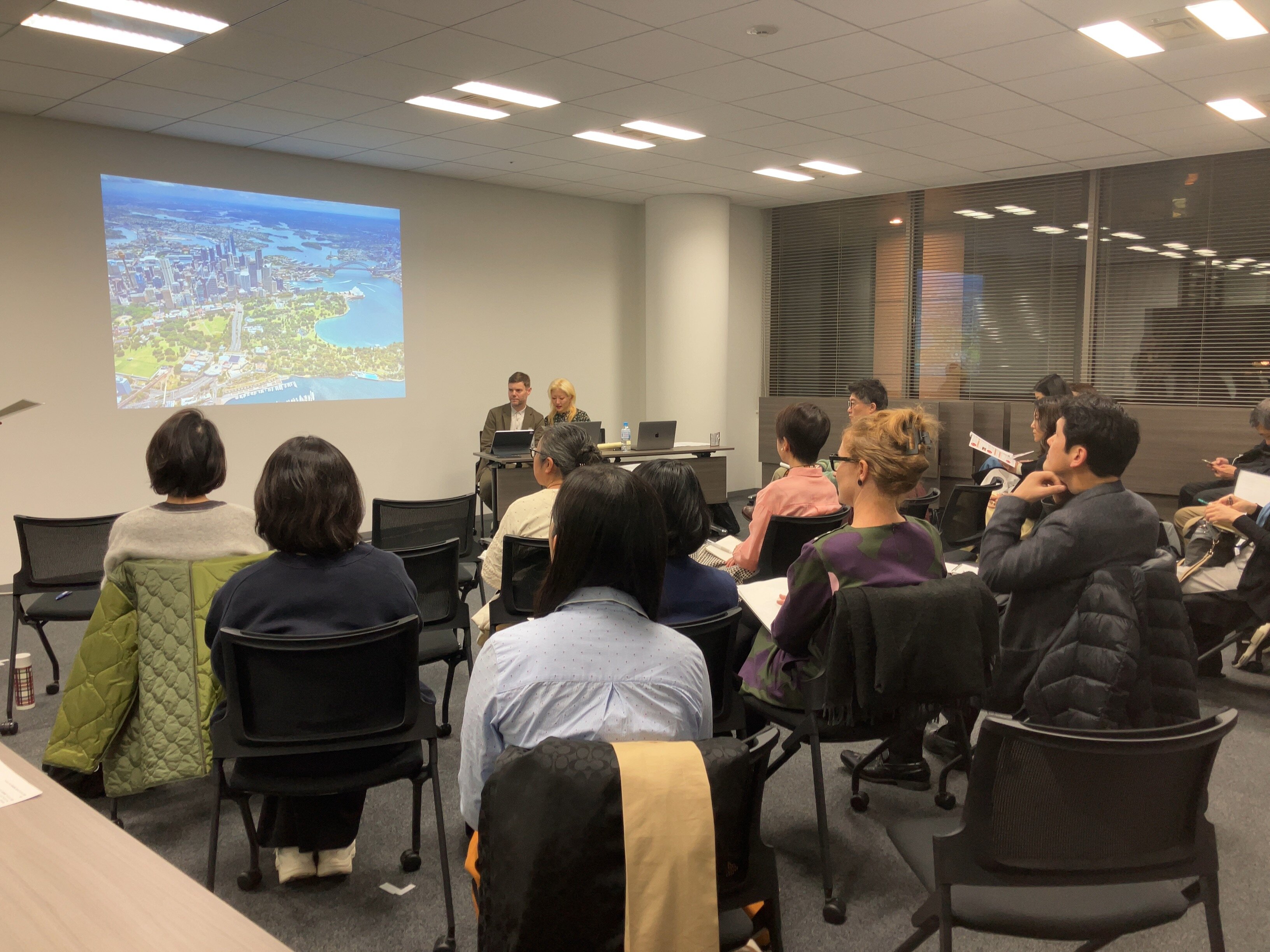
NCAR Talk002 held at the National Center for Art Research
Case study 1: the 19th-century Victorian art
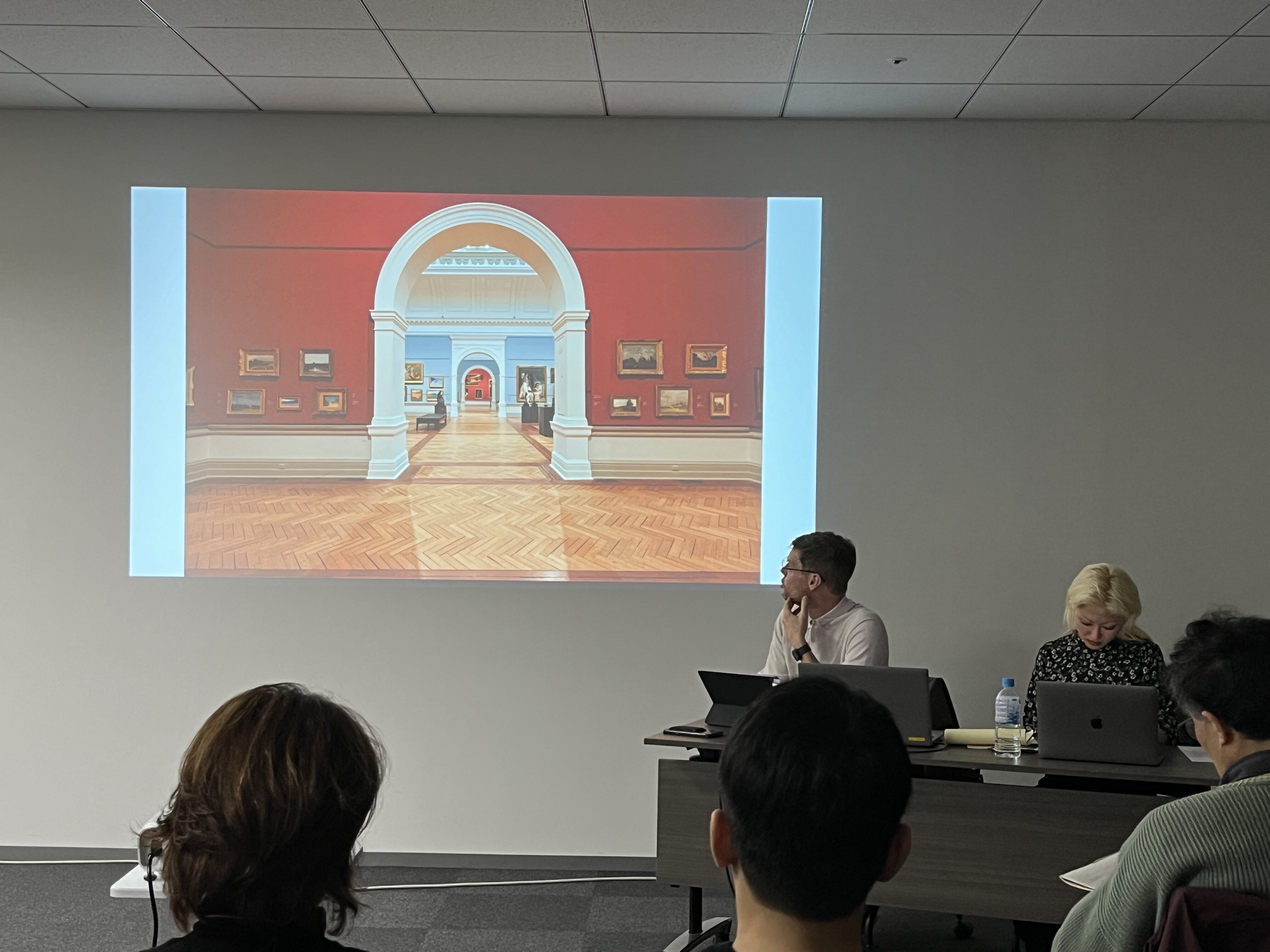
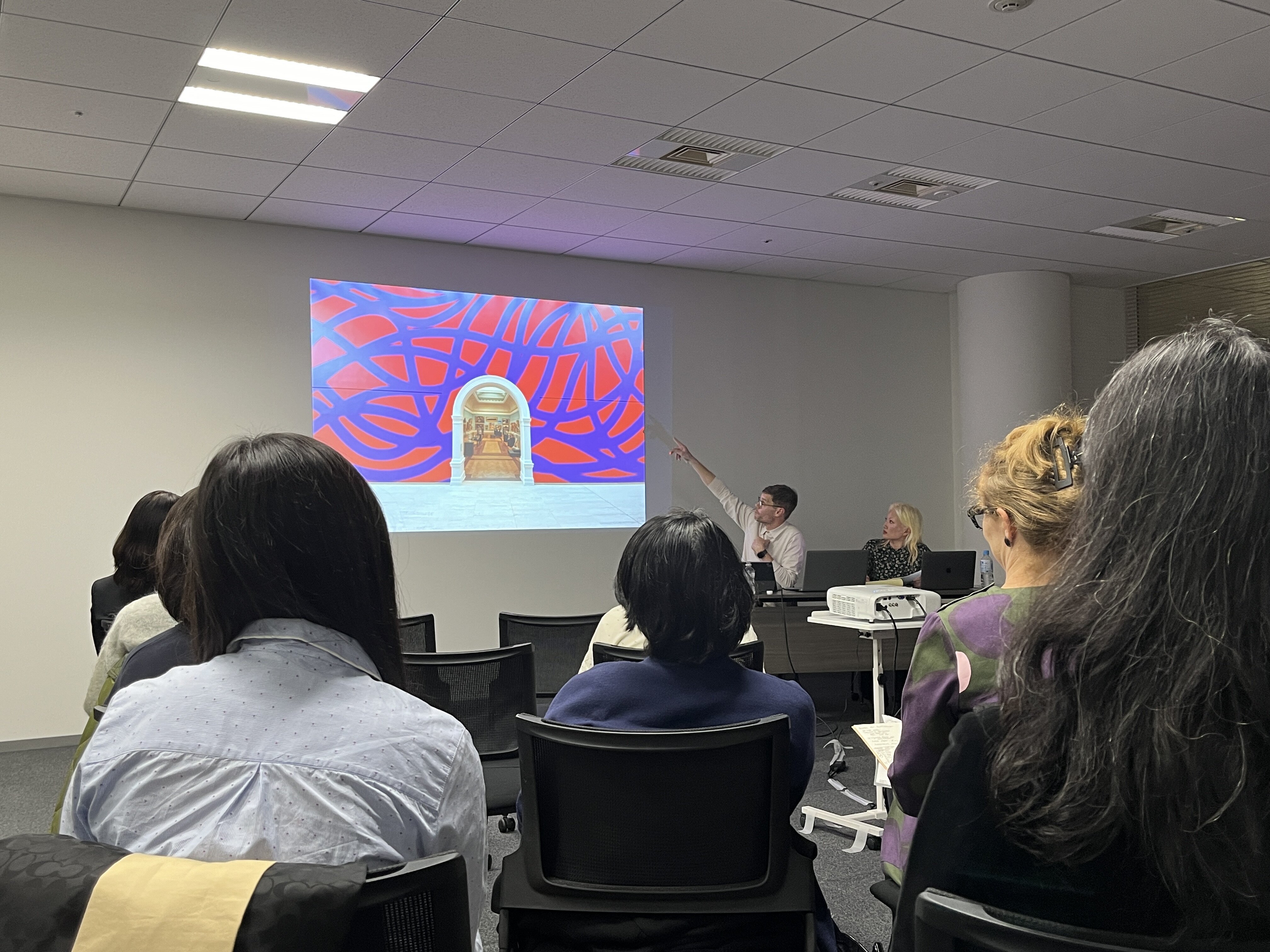
The first case study highlighted the 19th-century Victorian art exhibited in the Grand Courts—the oldest display spaces, opened in 1897. According to Mr. Chambers, the synergy between the architectural elements and the artwork on display creates a unique ecosystem—one that reflects Victorian interests ranging from Ancient Greece and Italy to the Middle East, while also revealing, from a contemporary perspective, the aesthetics and worldview of the Victorian era. At the same time, a newly constructed sculpture created by Cameroonian artist Pascale Marthine Tayou (1966–), for example, has been juxtaposed with Edward John Poynter’s The Visit of the Queen of Sheba to King Solomon (1881–1890), which provides a multi- layered sense of time and place within the exhibition space. Tayou’s sculptures, composed of piled vessels originally from the Arab world and collected in North Africa, reveal stories of material and aesthetic exchange. Mr. Chambers emphasized that Tayou’s installation offers a nuanced global narrative of colonization and trade in response to the Victorian world view, which invites viewers to the space in which different places and times are intertwined through the material cultures.
Case study 2: Cubism
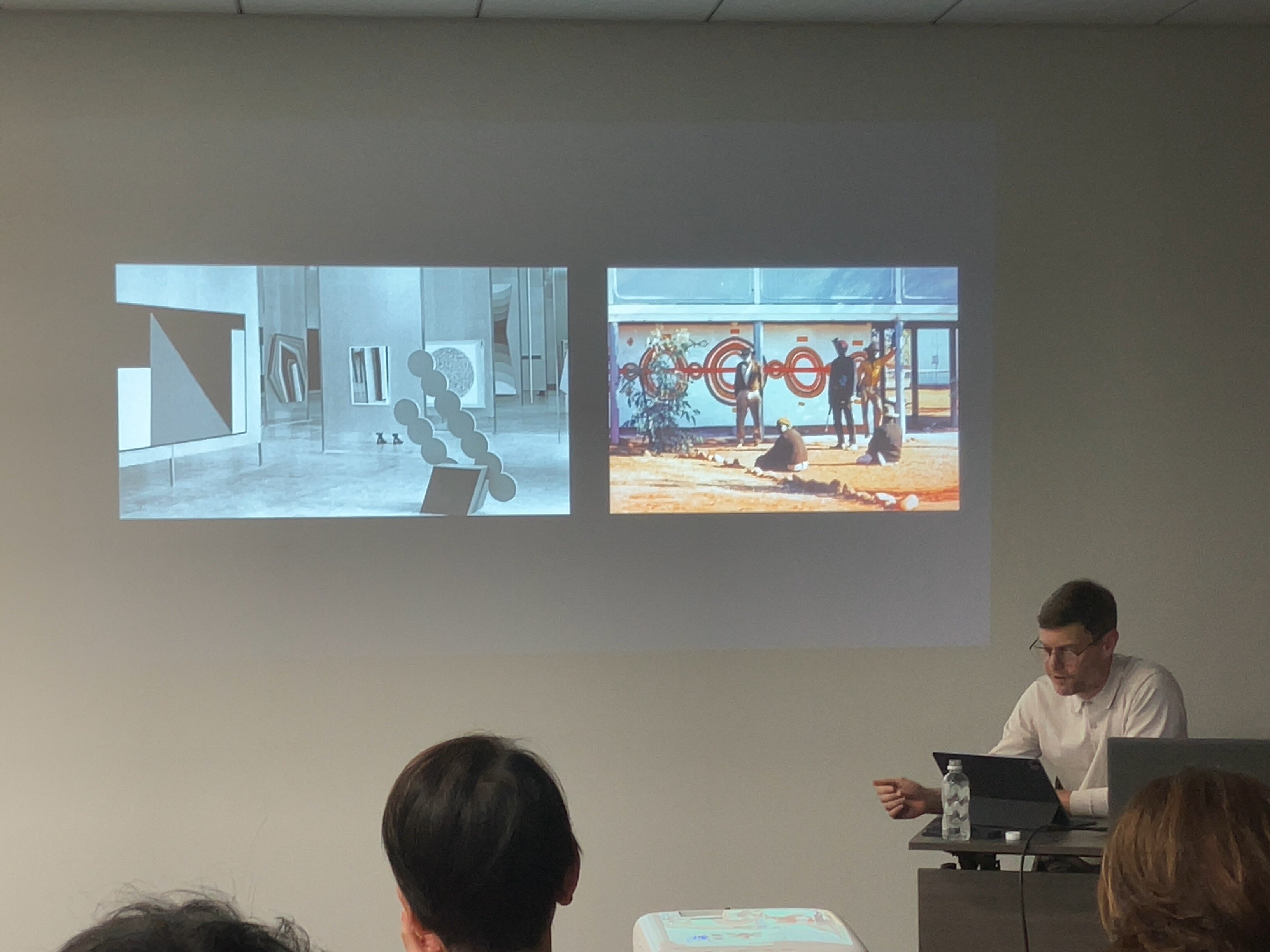
The second case study focused on Cubism in the early 20th-century and its role as a platform for international cultural exchange. Mr. Chambers noted that during the first decade of its history, prior to Australia’s independence, AGNSW primarily acquired British works under the category of ‘international art,’ reflecting the detached position of Australian art from the rest of the world. In contrast to such detachment, however, early 20th-century modernism served as a vital platform for international exchange. A notable example is academy led by French Cubist André Lhote (1885–1962), which attracted students from across the world, including Japan. Mr. Chambers emphasized that this multinational environment symbolizes the practice of modern art in spaces where different cultures intertwined. Cubism’s formalism, based upon borrowing from diverse world cultures, exemplified an indiscriminate aesthetic—one that spin widely transcended social, cultural, and religious boundaries. AGNSW’s cross-national collection of Cubism suggests that early modernism was not only a site of formal innovation but also a dynamic hub for global artistic dialogue and exchange.
Case study 3: Late modern abstraction
The final case study showcased Aboriginal abstract paintings from the 1960s and 1970s, emphasizing their possibilities for storytelling. Mr. Chambers pointed out that while the dominant discourse of high modernism tends to focus on the formal innovations of abstract painting, Australian Aboriginal art reminds us of art’s capacity for storytelling—extending beyond reductive arguments about form and revealing rich narratives of people and place embedded within the artwork. AGNSW’s collection of Aboriginal abstract paintings—including works by one of the most prominent Aboriginal artists, Emily Kame Kngwarreye (1910–1996)—conveys stories of local land and memory. Through numerous exhibitions both in Australia and abroad, AGNSW has explored and reinterpreted the stories conveyed by artists. As Mr. Chambers showcased in the talk, the shifting contexts shaped by different juxtapositions and collaborations across different times and places continue to inspire viewers to uncover multi-layered meanings embedded in the works and highlight cross-cultural connections centered on Aboriginal abstraction.
Conclusion
Australian Art, where Aboriginal history, the memory of colonization, and global exchange meet and intertwine, has continually interrogated the binary between ‘us’ and ‘them.’ As explored throughout the talk, the exceptional collections and curatorial projects at AGNSW have been driven by a question surrounding the evolving concept of the ‘international’: How is it possible to interpret and include diverse art that has developed quite literally inter — between ‘here’ in Australia and ‘there’ across the sea? AGNSW’s endeavor to reinterpret the timeframe of art history and interrogate boundaries, rather than exhibit works according to geographical divisions or chronological order, will continue to reveal nuanced stories yet to be told in the inter-spaces between diverse cultural and historical contexts.
Mr. Chambers’ invitation is part of "The Japan-Australia Museum Curator Exchange Program," which was established in 1989. Through this initiative, 18 Australian curators and 17 Japanese curators affiliated with the National Museum of Art have participated in the exchange program. NCAR is responsible for coordinating the program’s implementation.
