


Introduction
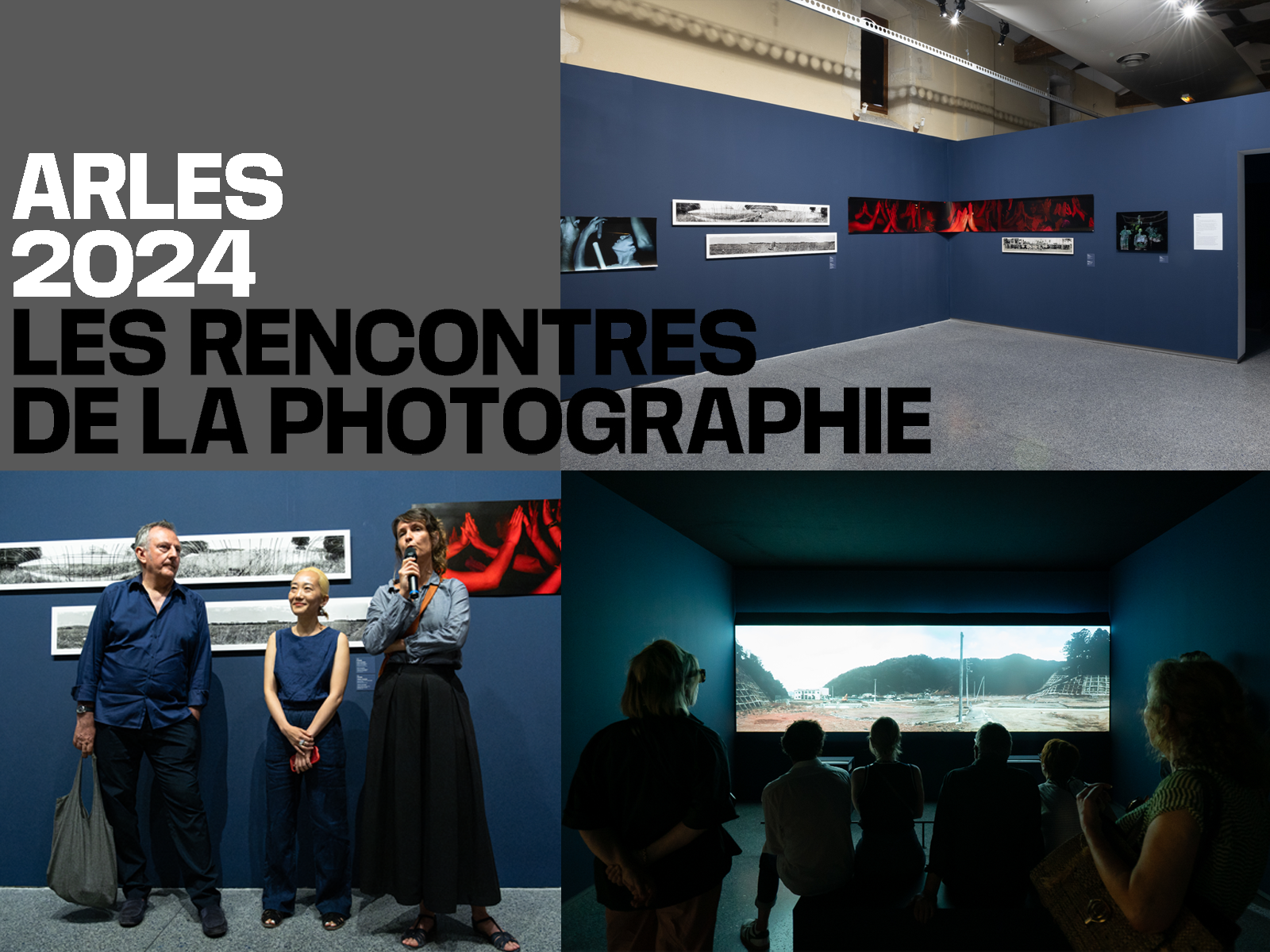
For NCAR Talk 003, we welcomed curator Amanda Marina, co-curator of Reflection – 11/03/11 Japanese Photographers Facing the Cataclysm at Les Rencontres d'Arles 2024, along with participating artists Fujii Hikaru and Iwane Ai. This exhibition, featuring nine photographers, focuses on community memory and resilience in the aftermath of the Great East Japan Earthquake on March 11, 2011, and tsunami, and subsequent Fukushima Daiichi Nuclear Power Plant disaster. In the talk, the speakers share insights into the background of the exhibition and their photographic projects from both curatorial and artistic perspectives.
Report by Amada Marina
First, curator Amanda Marina introduced the concept of the exhibition. As indicated by its title, the exhibition adopts the term “cataclysm” rather than “catastrophe” to describe the disaster. According to Amada, the word “cataclysm,” which implies a long-term and ongoing aftermath, reflects the curatorial approach of the exhibition: to address the social and geopolitical transformations of the past decade and to visualize society in the wake of the 3.11 disaster, rather than focusing solely on immediate destruction and loss. On the other hand, Amada said it was an unreasonable challenge to depict the disaster and its aftermath only with a few photographs. The earthquake and nuclear power plant accident exposed the complex structures of Japanese society, including invisible radioactive contamination, systemic discrimination and inequality, and Japan’s historical relationship with nuclear power dating back to the prewar period—issues that cannot be fully captured by only a small number of photographs. The exhibition highlighted photographers who explore innovative approaches to representing reality while confronting the limitations of photography. Amada highlighted the historical significance of the photographer’s efforts in working under danger and hardship and emphasized the importance of exhibiting their works in France, a country with a long history of photography.
Report by Iwane Ai
Iwane presented her project KIPUKA, focusing on the interaction between Maui and Futaba city in Fukushima. Throughout her project, Iwane has documented Fukushima Ondo, a traditional dance that was transmitted from Fukushima to Hawaii by immigrants more than 100 years ago. Inspired by the Hawaiian word kipuka, meaning “a place where new life emerges,” this project layers the intimate connection between Hawaii and Fukushima—extending beyond borders and generations—with images of forests regenerated from seeds growing after lava flows. In her report, Iwane introduced a vintage panoramic film camera from the Japanese diaspora community in Hawaii, which she used in her project. Using a traditional technique in which the camera is rotated 360 degrees while shooting, Iwane has captured a transformation of communities in Fukushima and Hawaii. In 2023, following the Lahaina wildfires, she returned to Hawaii to photograph the aftermath. Spanning from Fukushima to Hawaii, her photographic series sheds light on stories of human interaction amid ongoing cycles of destruction and regeneration, woven from the past to the present and from the present to the future.
Report by Fujii Hikaru
According to Fujii, it has been integral to ask questions and cultivate new fields of inquiry through artistic practice. Through his works, Fujii has created a diverse space that brings together people from varied backgrounds and fosters critical discussion. At Les Rencontres d’Arles 2024, he presented two works that address questions of forgetting. Record of Coastal Landscape is a series featuring the affected coastal areas after the 3.11 disaster from 2011 to 2015. This series reveals long-term social issues and gradual transformations in the Tohoku region that have been forgotten behind the mass media’s stereotypical image of “disaster.” The other work, The Classroom Divided by a Red Line, asks how discrimination can be remembered without being reduced to a mere record of information. This work documents a role-play performed by a group of elementary school students in which a red line structures geopolitical discrimination within the classroom. The video draws viewers in, positioning them as witnesses and renders discrimination visible as a structural experience. Fujii’s work focuses on issues that become visible through long-term engagement with communities, inviting us to question what is made visible and what is forgotten behind discrimination and structural amnesia.
Discussion
In the final section, the three participants discussed a range of topics, including the feedback they received at the photo festival, the significance of participating in international exhibitions, and their expectations regarding future artist support. Amada reflected that the project, which addresses questions about Japanese society, generated significant response from the audience. Although Japanese photographers have often been perceived in the international art scene as distant from socio-political issues, this exhibition—by introducing artists’ critical perspectives on society—revealed different aspects of the Japanese art scene to international audiences and was therefore significant.
Both Iwane and Fujii also emphasized the importance of international exhibitions for artists’ future careers. As these exhibitions play a crucial role in building networks with specialists worldwide and in creating opportunities for future projects, it is essential to make them more accessible to artists. During the discussion, it was suggested that the support system should extend beyond institutional circles to include independent professionals. The discussion also pointed out that, in order to strengthen the international presence of the Japanese art scene, it is necessary to establish structured support not only for artists but also for curators.
NCAR will continue to support both artists and curators in fostering the development of the Japanese art scene within international contexts.
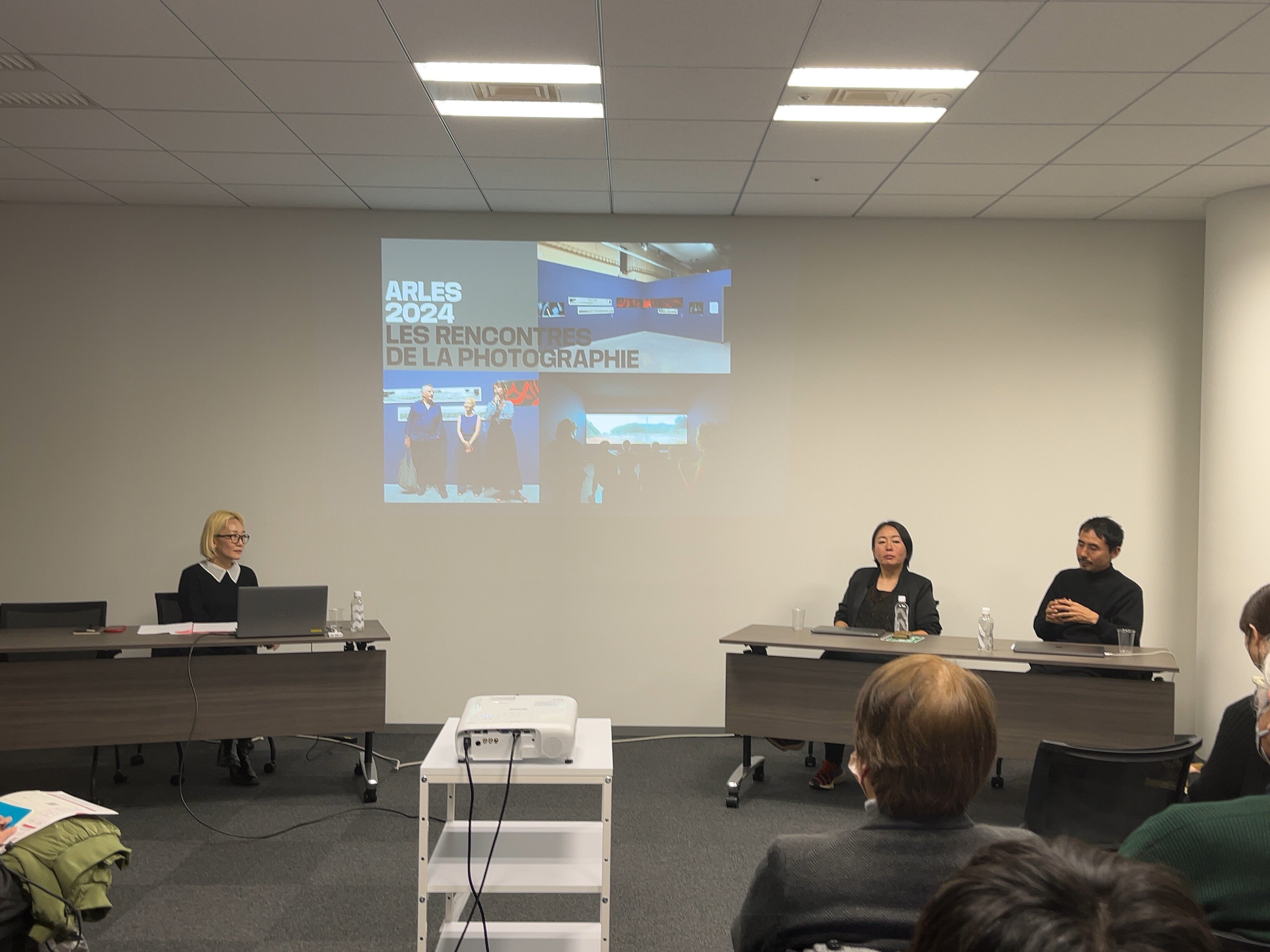
From left: Amada Marina, Iwane Ai, and Fujii Hikaru
