

Accessibility Training Resources
We provide training content on accessibility so that everyone can use museums with confidence. Focusing on the key concepts of ‘reasonable accommodations’ and ‘information accessibility,’ these materials can be used as learning opportunities to support museum operations.
News
Accessibility Training for Museum
This training is designed for museum staff and related personnel in Japan to learn about accessibility. It provides foundational knowledge to help start initiatives in accessibility and social inclusion, which are increasingly important in museum management.
This program was conducted from October 2025 through February 2026 as "Accessibillity Training for Museum Management Supported by the Agency for Cultural Affairs, Government of Japan in the fiscal 2025". It consisted of two stages: e-learning and in-person workshops.
e-learning
The training is all available online. All participants watch the training videos, and completion is confirmed through reports submitted to the program coordinator.
-
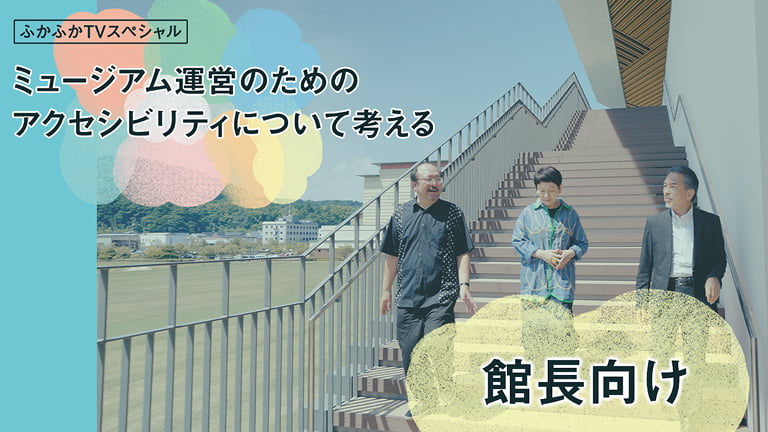
Directors and Managers Course
In the video, the directors of the National Museum of Western Art, Yokohama Museum of Art, and Tottori Prefectural Museum of Art appear and introduce their respective initiatives.
Total view time:30 min. -
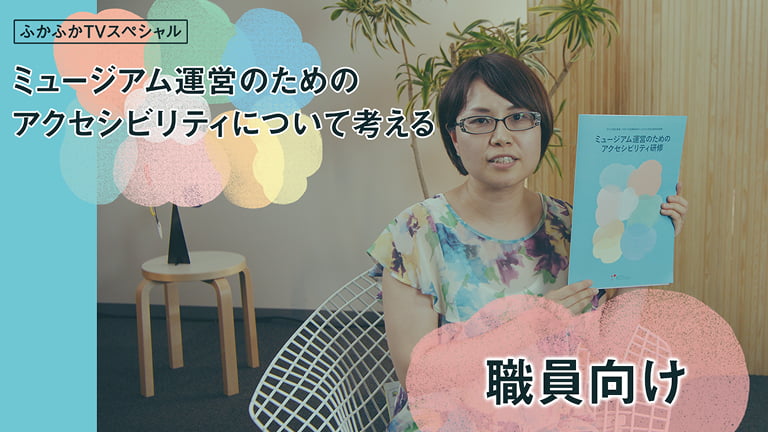
All Staff Course
You can learn about the four keywords "social model of disability," "reasonable accommodation," "information accessibility," and “equity and equality" through this program.
Total view time: 85 min.
In-Person Workshops
NCAR sends instructors to museums across the country to provide programs in a workshop format.
* This program will not be offered in FY 2026.
-
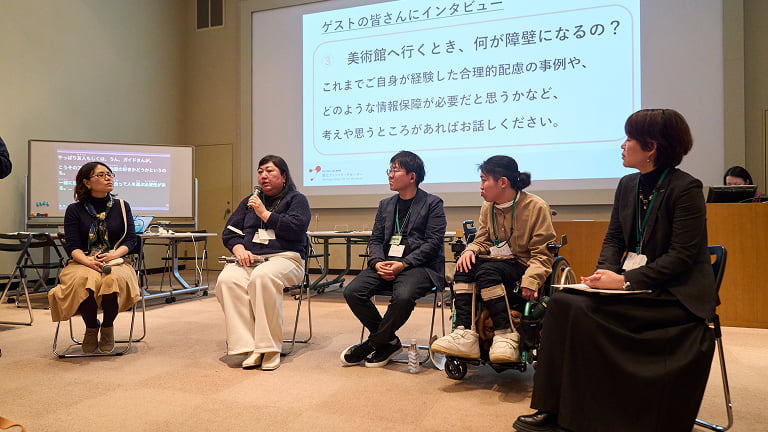
Listening to Guest Talks
Guests from each region share their personal cultural experiences.
-
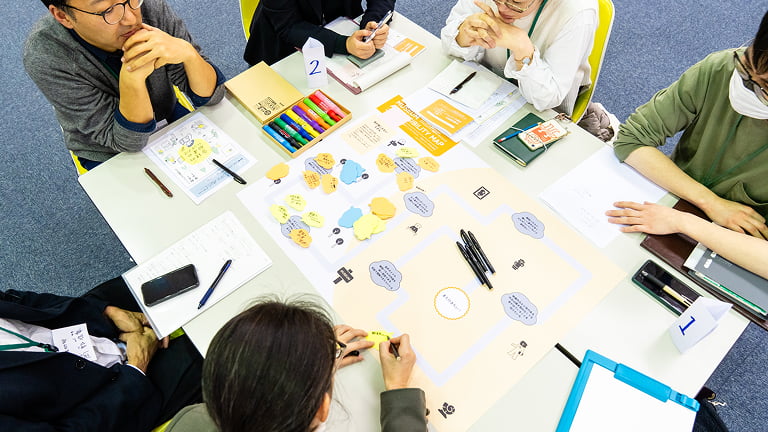
Group Work
Museum staff discuss how to implement accessibility initiatives starting tomorrow.
Museum Accessibility Course Fuka-fuka TV
This video series provides a course to learn and apply foundational knowledge on accessibility, focusing on the key concepts of ‘reasonable accommodations’ and ‘information accessibility.’ It draws on examples from museums across Japan to support practical understanding.
This program was conducted from October 2024 through February 2025 as "Museum Accessibility Course Fuka-fuka TV Supported by the Agency for Cultural Affairs, Government of Japan in the fiscal 2024".
Orientation Video
-
*
If the video doesn't load, watch it on Vimeo:
https://vimeo.com/1001525904/76ca95fd90
Course Videos
A seven-video series in three stages: Theory, Case Studies, and Summary. Only the Theory stage is currently available.
1. Theory Stage (Publicly Available)
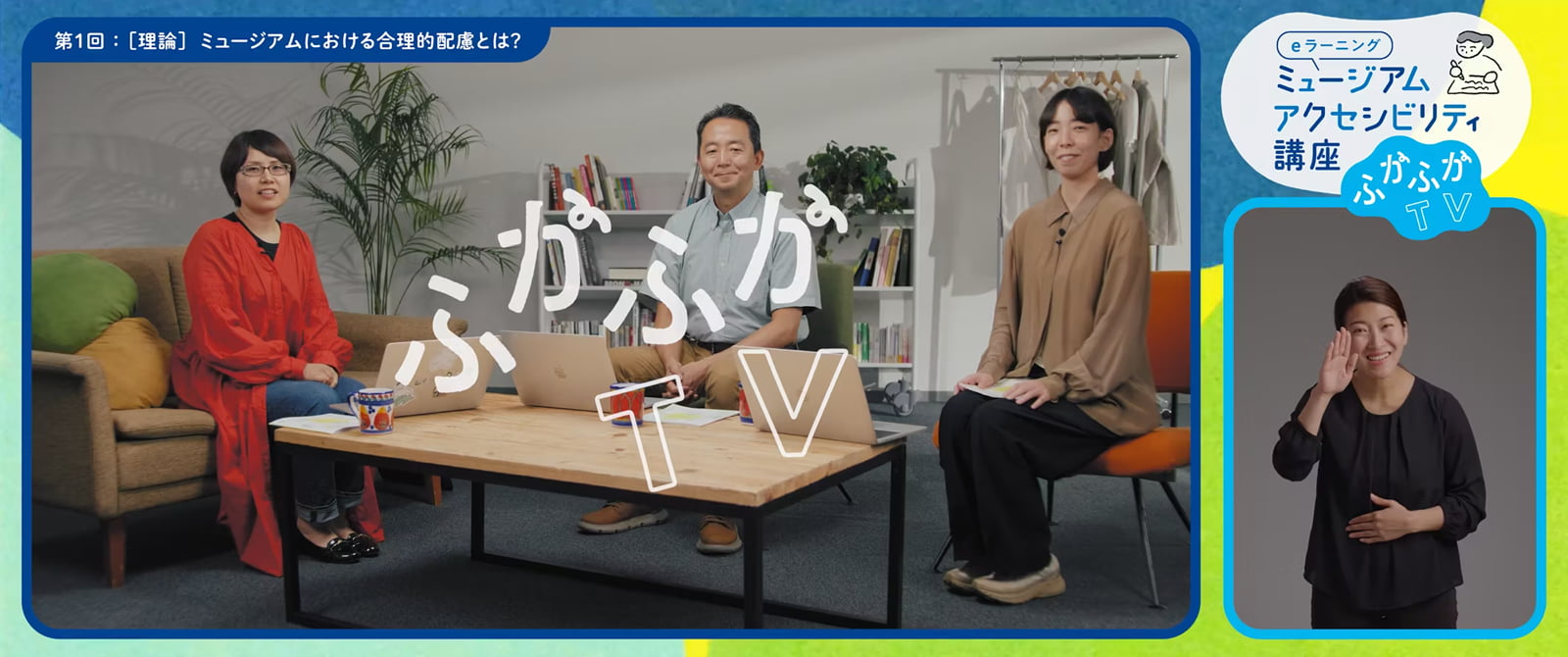
Learn the basic concepts of reasonable accommodations and information accessibility.
2. Case Studies Stage
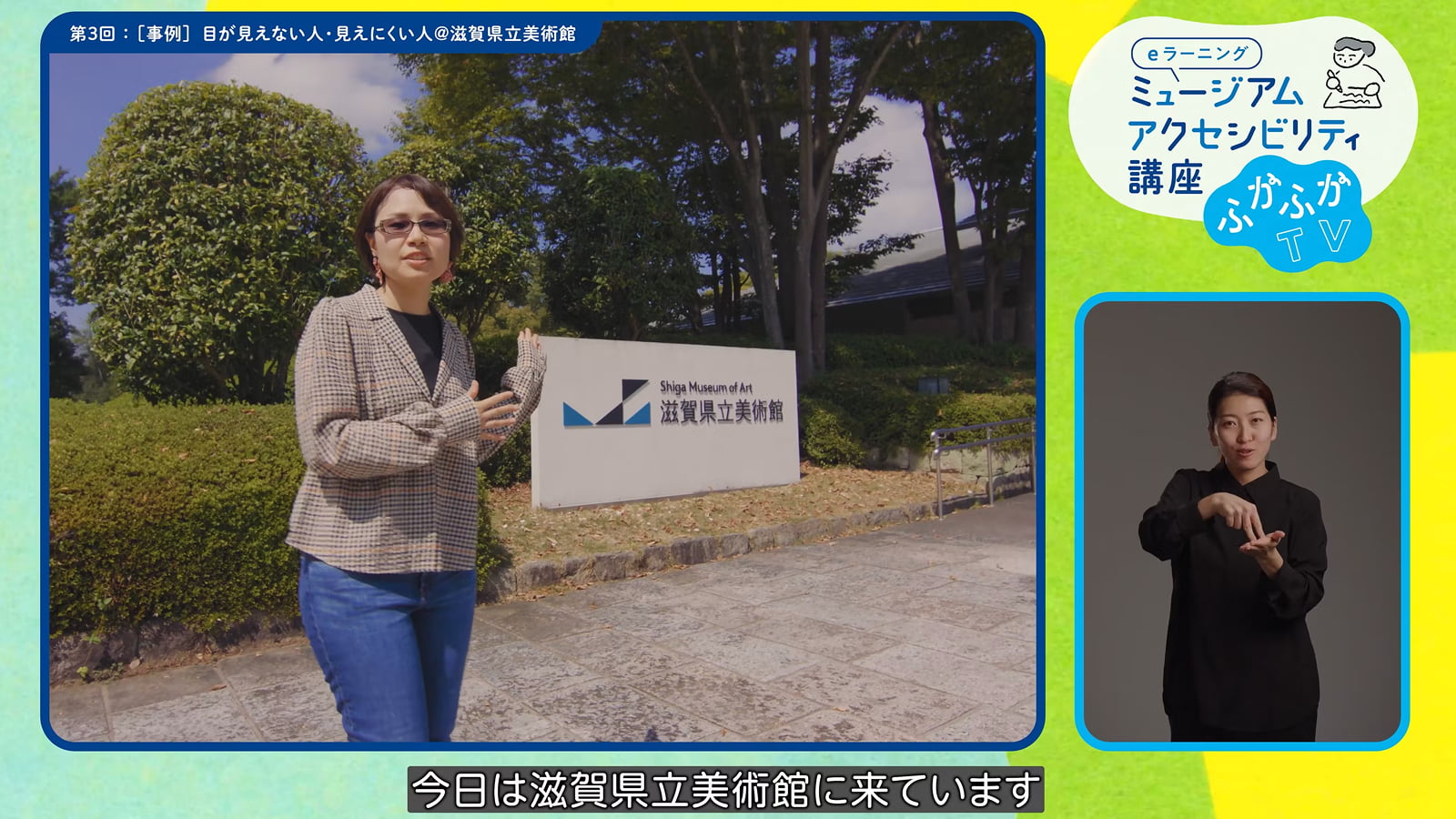
You can deepen your understanding through practical examples from museums across Japan.
3. Summary Stage
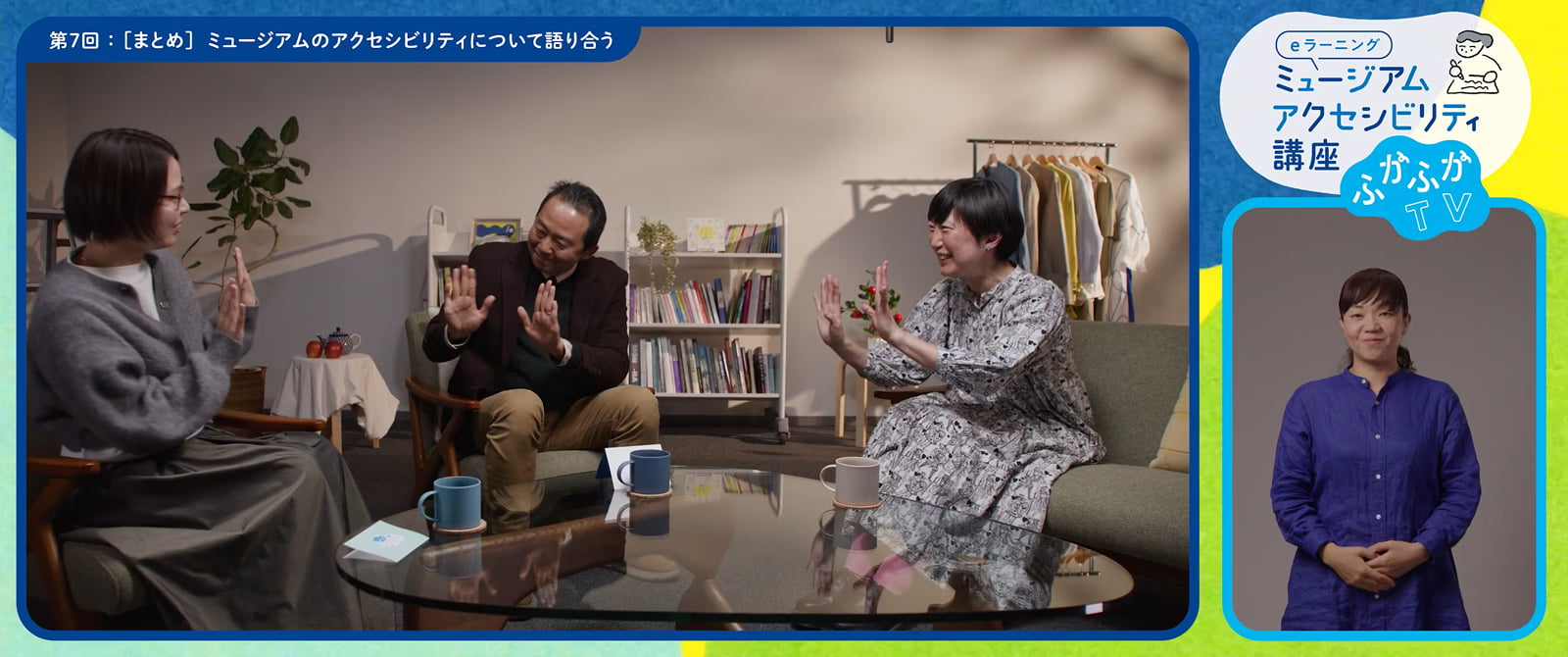
Past guest speakers engage in dialogue to discuss the practical implementation of accessibility in museums.
The Handbook of Reasonable Accommodation, Learning from the cases in the Museum
The intension of the handbook is to make people dedicated in museums learn and take action towards the diverse and symbiotic society.
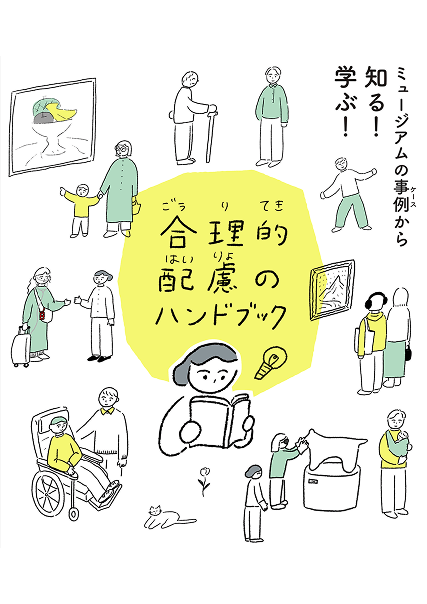
- Modified B5 size, 40 pages
-
- Authors:
- Suzuki Chikako, Ito Shunsuke
- Editor:
- Yonezu Itsuka
- Design:
- Kuriyagawa Mai
- Illustration:
- Isono Kei
- Publisher:
- NCAR
Read the PDF Data
You can read the handbook in digital devices from below.
The handbook is written in Japanese.
Text for Audio Reading
This is the text prepared for audio reading, edited to be accessible for blind or hard of seeing users.
The links below are all in Japanese.
Introduction Video
Watching this video before reading the booklet will help deepen your understanding!
The video explains the Act for Eliminating Discrimination against Persons with Disabilities, which requires reasonable accommodations, and introduces important concepts underlying them, such as social barriers and the social model of disability.
-
*
If the video doesn't load, watch it on Vimeo:
https://vimeo.com/943486926
Case Studies on Reasonable Accommodations
This handbook summarizes cases collected through the ‘DEAI Research Lab,’ launched in August 2023, and refined over approximately six months through verification and discussion.For more information on the DEAI Research Lab, please see the ‘Diversity & Inclusion’ page under ‘Co-creation.